Our Methodology
A structured, evidence-based approach that meets every child where they are and takes them further than they imagined possible.
How It Works
Six steps that transform a child's relationship with reading delivered every day inside public school classrooms.
Assess Every Child
Each learner is assessed individually to identify exactly which letter sounds they know and which they don't. No child is left behind.
Group by Level
Children are placed in small groups of 6-8 based on their current knowledge level, following the Teaching at the Right Level (TaRL).
Teach Sounds in Order
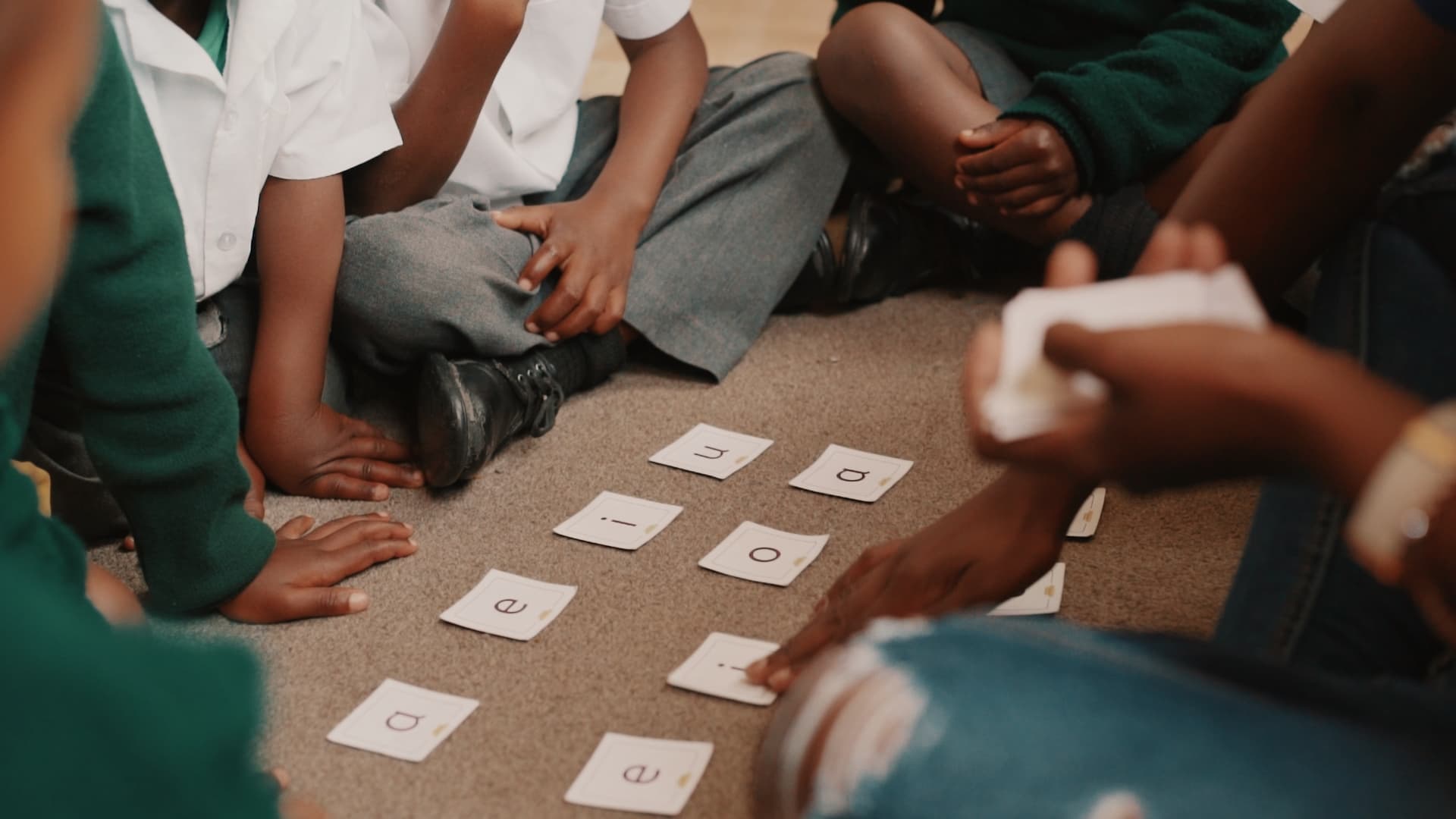
Education Assistants use structured, sequential lessons to teach letter sounds systematically. A group only moves forward once mastery is achieved.
Play, Practice & Progress
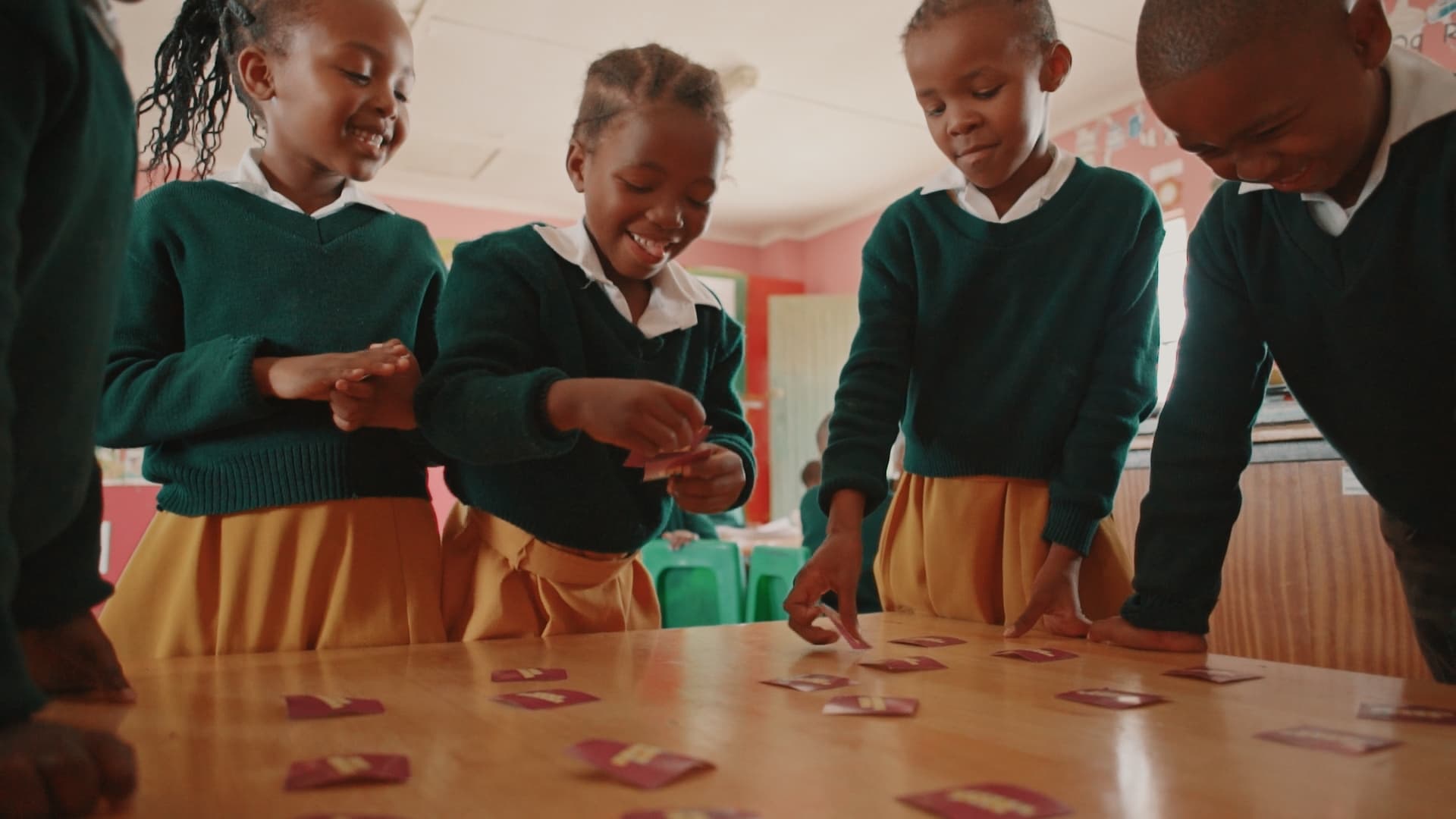
Lessons are delivered through games and activities that keep children engaged and motivated, making daily practice something learners look forward to.
Measure & Adapt
Ongoing assessments track every child's progress in real time. Data is used to reassign groups, adjust lessons, and ensure no learner stagnates.
Blend, Decode & Read
Once letter sounds are mastered, children advance to blending and decoding — the critical bridge between knowing sounds and reading real words.
Partnership with the Department of Education
We don't work around the system. We work inside it, in partnership with the Eastern Cape Department of Education to deliver impact at scale through public schools.
Inside Public Schools
We work within existing public school infrastructure, not alongside it. No new buildings, no separate locations, no setup or infrastructure costs.
Alongside Teachers
Education Assistants work as partners to the class teacher, not replacements. This adds capacity rather than replacing the existing system.
Built to Scale
The model is designed to grow. By embedding in the DoE system and training community youth, we can expand to hundreds of schools without creating a parallel system.
Supporting the Curriculum
Our laser focus on children in Grades R & 1 achieving letter sound mastering enables teachers to progress through their curriculum with confidence.
Why a Government Partnership Matters
South Africa has millions of children in public schools who cannot read. No NGO can solve this alone. By designing our programme to work within and through the government school system, we create the conditions for lasting, system-wide change.
Our partnership with the EC DoE means access, credibility, and a pathway to scale so that what works in one school can reach thousands.
Every Child Learns at Their Level
Most classroom instruction pitches to the middle, leaving behind the children who need the most support. We do the opposite.
Using the Teaching at the Right Level (TaRL) methodology, we assess every child individually and group them by their actual knowledge level, not their age or grade.
Why this matters
Letter sound knowledge is the single highest-correlated metric to future reading. Children that finish grade 1 without knowing their letter sounds rarely go on to become future readers.
Groups are fluid. As children progress, they move up. As the data shows gaps, we adjust. The system is always responding.
Learning Levels
Learning to recognise and name individual letter sounds
Consolidating sounds, building confidence, mastering entire alphabet
Building automaticity, hitting 40lcpm benchmark, learning digraphs
Blending letter sounds together to begin to form, decode, and read words.
Training Education Assistants
We recruit unemployed young people from the communities we serve and transform them into skilled literacy practitioners, trained, supported, and supervised to deliver results.
What Our Training Covers
Phonics Foundations
Deep understanding of letter-sound relationships, common confusions, and how to model sounds accurately.
Small Group Facilitation
How to manage groups of 6-8 children, maintain engagement, and handle different paces within one group.
Assessment Techniques
One-on-one assessment protocols that quickly identify each child's level with precision and consistency.
Games & Activities
A full toolkit of structured games that make practice joyful — EAs learn how to run each game with confidence.
Data Recording
Simple, fast methods for recording progress in real time so the data is always current and actionable.
Classroom Partnership
How to work alongside the class teacher as a professional partner, not just a helper.
The Small Group Model
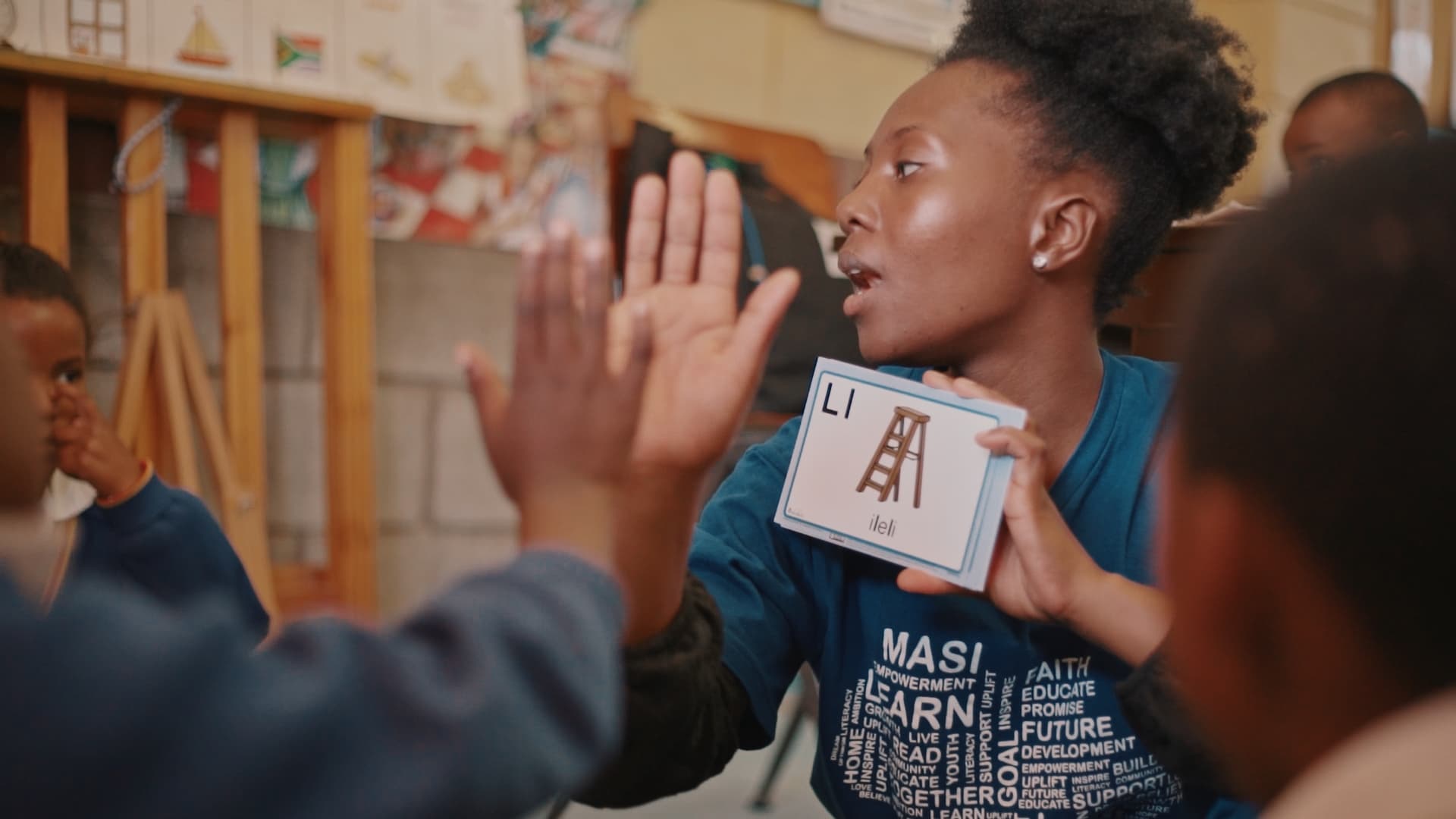
Sessions take place inside the regular classroom during school hours. While the class teacher works with the rest of the class, the EA runs focused small-group sessions with children at similar levels.
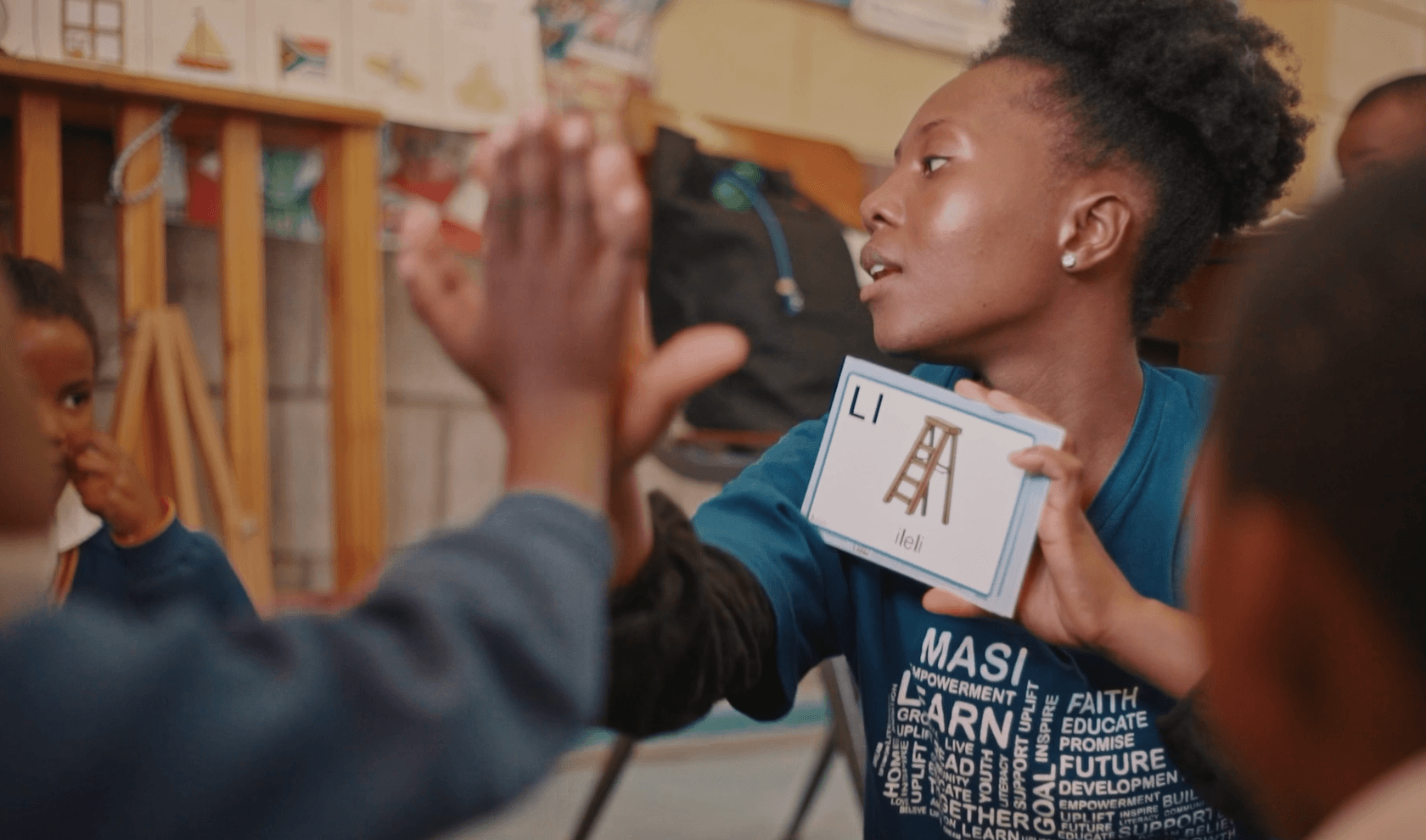
Education Assistants are trained, supervised, and continuously supported throughout the programme year.
Our Education Assistants are young people from the same communities as the children they teach. That shared context, shared language and shared culture makes them uniquely effective.
Early Grade Reading Assessment
We use the internationally validated EGRA tool to measure every child's reading ability — giving us rigorous, comparable evidence of what's working and where to improve.
What Is an EGRA?
The Early Grade Reading Assessment is a short, one-on-one oral reading assessment designed specifically for early grade learners. It measures the foundational skills that predict long-term reading success, from letter-sound knowledge through to reading fluency and comprehension.
Developed by RTI International and adopted by governments and NGOs across the globe, EGRA gives us a precise, reliable window into every child's reading development, not just whether they passed a grade, but exactly what they can and cannot yet do.
Quick to administer. Each EGRA takes just a few minutes per child and is conducted by trained Education Assistants making it practical to run at scale across hundreds of classrooms.
Why EGRA Matters to Us
A Standardised Measure
EGRA provides an internationally validated, consistent measure of reading ability allowing us to compare children's progress against benchmarks and across schools.
Identifies the Right Gaps
Unlike grade-level tests, EGRA pinpoints exactly where a child's reading breaks down whether at letter sounds, blending, decoding, or fluency so we can intervene precisely.
Tracks Real Progress
By running EGRA at the start and end of each programme year, we generate rigorous before-and-after evidence of how much children have grown under our intervention.
Proven Across Africa
EGRA has been used in over 60 countries to monitor early literacy. Using it places our programme within a global evidence base and makes our results comparable internationally.
Games & Activities
Every session includes games designed to make letter-sound practice something children genuinely look forward to. Watch them in action on our Media page.
Watch the Games VideosThe Results Speak for Themselves
Our methodology is built on evidence and validated by data. Explore what it's achieving in classrooms across the Eastern Cape.